Authenticity Is the Strategy: AI Headshots vs. Real Photography in St. Louis
We’re a working St. Louis photography studio, so take this for what it is — but every claim here is backed by data, not just our opinion. Here’s why real is becoming the strategic choice, not the sentimental one.
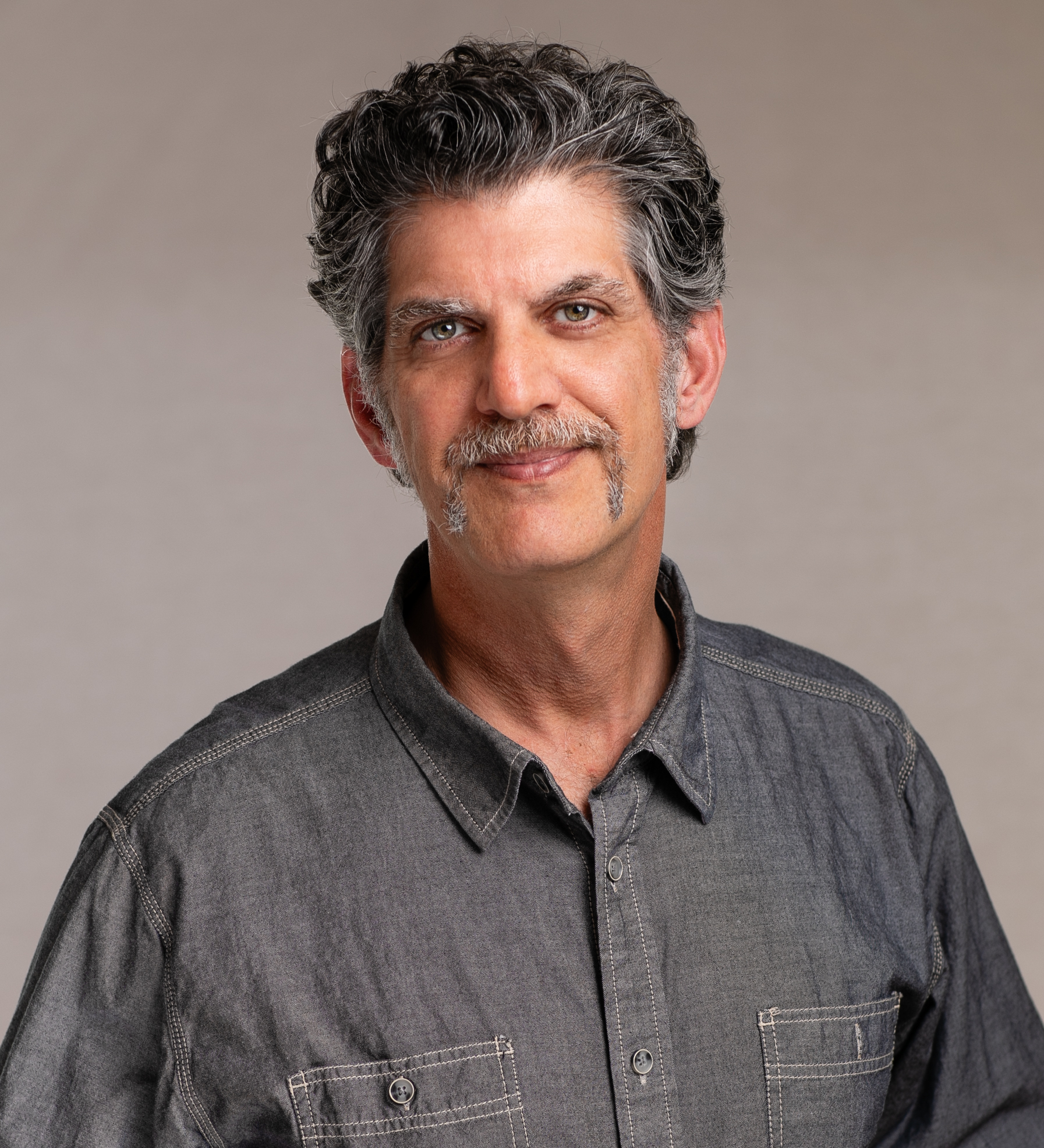
Rez Behnam — real photographer, real photos. No AI involved.
Part of the Shari Photography family of studios
How AI Headshot Generators Actually Work
You upload a handful of selfies or casual photos. The tool trains a small model on your face, then generates new images of “you” — in professional lighting, business attire, and studio-style backgrounds you never actually wore or stood in.
At their best, the results are genuinely convincing, and the tools have improved a lot in the last year. For a quick, low-stakes profile picture, several do a solid job.
The honest question isn’t whether the technology works. It’s whether it works for your specific situation — and that depends entirely on what the photo needs to do for you.
What a Real Photographer Catches That an App Can’t
- It doesn’t know you. An app generates a generic “professional” version of your face. A photographer talks to you first — what the photo is for, how you want to come across, what you’re self-conscious about — and shoots and retouches around that conversation.
- Consistency across a team falls apart. Run 15 employees through the same AI tool and you’ll get 15 different lighting styles, background treatments, and levels of “AI-ness.” A real session guarantees everyone matches.
- It can’t fix what’s not in the training photos. Bad haircut, outdated glasses, a look that doesn’t match who you are today — AI can only remix what you feed it. A photographer works with the real, current you.
- Small details still give it away. Hands, ears, collar lines, and asymmetrical lighting are still where most tools slip, even the good ones. Trained eyes — recruiters, casting directors, clients — notice more than people expect.
Where Trust Still Has a Face
LinkedIn’s photo policy simply requires your headshot to “reflect your likeness.”
The people looking at your profile, your firm’s site, and your team page are what’s actually putting you at risk — and the research on how they react is not subtle, and it’s moving fast in one direction.
Sources: Fractl / Search Engine Land, Q2 2026 (1,008 U.S. consumers) · Klaviyo / Datalily, March 2026 (8,000 consumers, 8 countries) · Gartner, 2026
- Recruiter data: a 2024 survey of 1,087 recruiters found 66% react negatively once they learn a headshot was AI-generated, and 88% said they’d want to know either way (Ringover, 2024). Most AI headshots pass the first glance — the problem is what happens after, and “after” is trending worse for AI every year.
- Organizations that answer to clients, patients, and regulators are moving first. Greentarget banned AI-generated imagery from all company assets. Law firm Bianchi and Brandt (Phoenix) made the same call for attorney bios. Financial firms carry added exposure: FINRA/SEC “fair and balanced” rules put synthetic headshots on shaky compliance ground.
- This isn’t universal yet — not every firm has a written policy against AI imagery. But for a business whose credibility depends on client and patient trust, using an AI headshot isn’t a neutral, cost-saving choice anymore. It’s a visible signal, at a moment when a growing share of the public says that exact signal makes them trust you less.
The Academic Research Says the Same Thing
This isn’t just industry survey data. Peer-reviewed research backs it up, and one finding in particular is directly relevant to headshots specifically:
- A 2026 systematic review of 35 studies on AI-generated marketing content (American Impact Review) found that when audiences realize content is AI-generated, it triggers what researchers call “persuasion knowledge” — people feel like they’re being sold to, which lowers both authenticity and trust. Critically, the effect was strongest for emotional or identity-based content, specifically including portraits. That’s not a general marketing finding being stretched to apply to headshots — headshots are the exact category the research flags as most affected.
- A controlled study of 790 consumers (“Brand Trust in the Age of Synthetic Media,” 2025) found that undisclosed AI-generated faces caused a strong, statistically significant decline in consumer trust — both in a brand’s perceived integrity and its perceived benevolence, among the largest effects the researchers measured. Disclosing the AI use afterward helped, but never fully closed the gap back to how people trust a real human image. Study participants described the AI faces as “manipulative” and “uncanny.”
- Research published in the International Journal of Market Research (2025) describes a self-reinforcing “cycle of AI mistrust”: companies overstate or overuse AI imagery, audiences notice and push back, and that backlash makes people more skeptical of the next AI-generated image they see — including yours, even if you had nothing to do with the last one that felt fake.
Put plainly: the research doesn’t just say “some people are wary of AI.” It specifically says portraits and identity-based images are where that wariness hits hardest — which is exactly the category a headshot falls into.
What this means, in practice:
- People associate real photography with honesty and professionalism. Synthetic faces tend to trigger discomfort and distrust — the “uncanny valley” effect is a documented, measured phenomenon, not just a feeling.
- Disclosure helps, but doesn’t fully fix it. Even when a company is upfront that an image is AI-generated, research shows audiences still rate it as less trustworthy and less “human” than a real photo.
- The distrust isn’t evenly spread — it peaks specifically in personal-identity contexts: headshots, leadership bios, testimonials. The exact places you’d be tempted to cut corners with AI are the places the research says it costs you the most.
The Case for Real: A Verdict By Use Case
| Use Case | AI Headshot | Real Photography |
|---|---|---|
| Casual social profile, low stakes | Fine | Overkill |
| LinkedIn, active job search | Risky — see recruiter data above | Recommended |
| Acting / casting submissions | Don’t — casting directors can tell | Required |
| Law firm, medical, financial bio | Growing reputational & compliance risk | Recommended |
| Entire company team page | Inconsistent results across people | Recommended |
Frequently Asked Questions
What does LinkedIn actually require for profile photos?
Your photo needs to reflect your actual likeness — that’s the core requirement. Beyond that, the bigger consideration isn’t the platform’s rules, it’s how the people viewing your profile react once they realize a photo is AI-generated.
Can casting directors actually tell if a headshot is AI-generated?
Often, yes — and even when they can’t tell from the image alone, an AI headshot that doesn’t match how you actually look and move in the room creates an immediate disconnect at the audition. For casting specifically, the image needs to be a reliable preview of the real person.
Are AI headshots ever a genuinely good option?
Yes — for low-stakes, casual use where budget and speed matter more than precision, a good AI tool can be a reasonable choice. The tradeoffs above are about situations where the photo is doing real professional work for you.
Can I just use ChatGPT, Copilot, or another AI chatbot to make my headshot instead of a dedicated app?
You can with both. ChatGPT and Microsoft Copilot can each generate an image from an uploaded photo, and a lot of people are trying this instead of paying for a dedicated headshot app.
The catch is the same for both: neither fine-tunes a model on your specific face the way apps like Aragon or HeadshotPro do. They’re interpreting one uploaded photo through a general-purpose image model, not learning your actual facial structure from several.
The common, well-documented result: the output looks like a relative of you — similar coloring and build, but the jawline, nose, or eye spacing are noticeably off.
(One note for accuracy: Claude, Anthropic’s AI assistant, doesn’t generate images at all — if someone mentions using “Claude” for a headshot, they’re likely thinking of a different tool.)
What does a real photography session cost compared to an AI app?
AI apps typically run $10–$30. Sessions at our St. Louis studio start at $225, which includes wardrobe guidance, posing direction, same-day image selection, and retouching based on an actual conversation with you about how you want to look. See full pricing here.
Human First. Always.
Sessions available 7 days a week at our St. Louis studio. Same-day image selection.
Or call / text: 314-221-2166