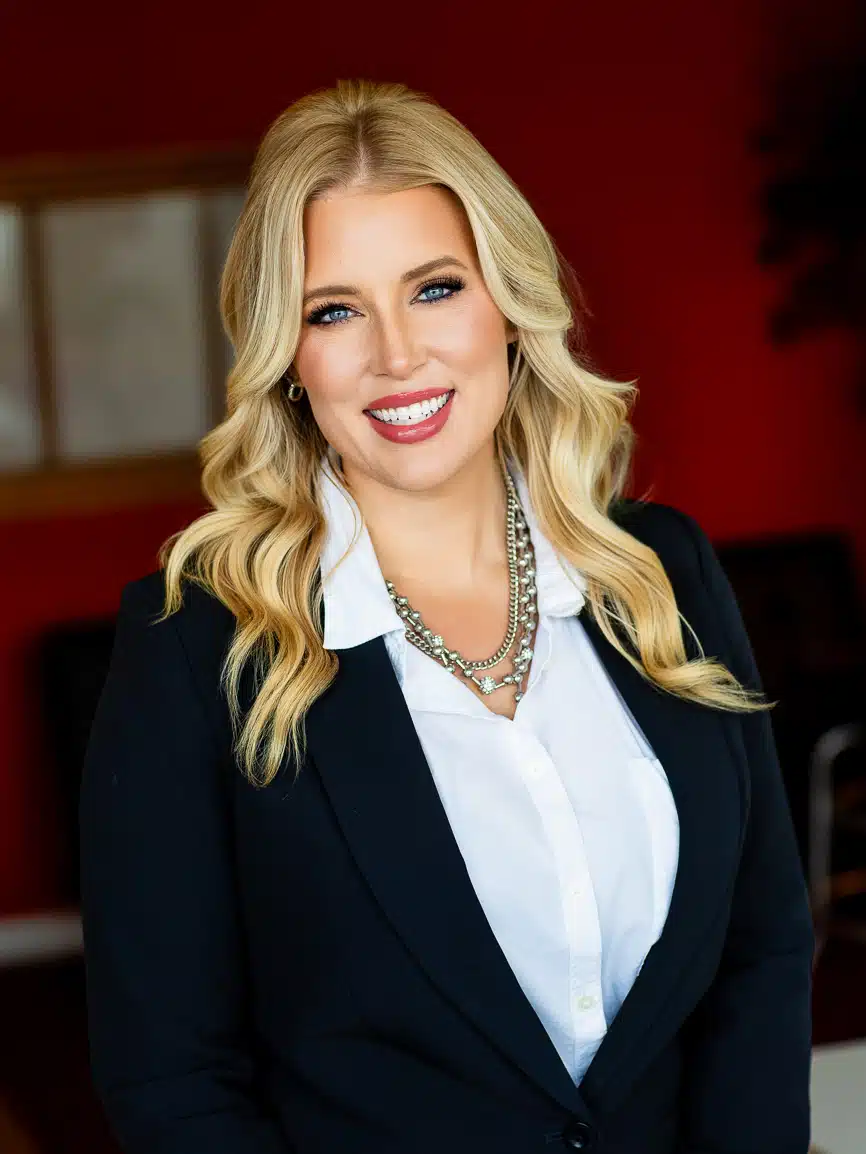
The AI Headshot Experiment Is Over. Here Is What St. Louis Professionals Are Doing Instead.
For about two years, AI headshot tools felt like a genuine breakthrough. Upload a handful of selfies, wait twenty minutes, pay less than the cost of lunch, and walk away with something that looked — at least on a small screen — like a professional photograph.
St. Louis professionals tried it. A lot of them.
And now a lot of them are quietly replacing those images.
Not because the technology got worse. In some ways it got better. But because the professional world figured out what was happening — and the backlash arrived faster than anyone in the AI industry anticipated.
What the Data Actually Shows
The numbers behind the AI headshot backlash are not subtle.
Researchers ran a controlled experiment pairing identical resumes with either a professional human-taken headshot or a top-tier AI-generated version. Recruiters rated the AI-version profiles 22% lower on perceived trustworthiness and 31% lower on likelihood to invite for interview — despite identical bullet points, schools, and companies listed. City-Data
Read that again. Same resume. Same experience. Same credentials. The only variable was the photo — and the AI photo cost candidates nearly a third of their interview chances before a single word of their resume was read.
Studies show that 90% of consumers prioritize authenticity when evaluating businesses and professionals. Even subtle AI edits risk eroding trust, damaging credibility, and reducing the perception of professionalism. mySidewalk
A senior HR director at a Fortune 500 firm quietly updated her team’s internal screening protocol: “If the profile photo looks too perfect — no visible pores, unnatural lighting, or uncanny symmetry — flag it for manual review. We’re seeing a 37% lower interview-to-offer conversion rate for those candidates.” Jefflottmann
This is not a fringe reaction from a few traditionalists who distrust technology. It is a measurable, documented shift in how the professional world evaluates the people it encounters online.
Why St. Louis Professionals Are Especially Vulnerable to This Problem
St. Louis is a relationship-driven city. Finance, law, healthcare, real estate, consulting — the industries that dominate the professional landscape here are industries where trust is built over time and personal credibility is everything.
Using a picture that is not truly of you damages your credibility. Authenticity is the foundation — people do business with people, and they want to recognize the person they are meeting. AI images strip away the quirks that make you a real human being. Data USA
In a market like Clayton, Ladue, or Chesterfield — where attorneys, financial advisors, and executives operate in tight professional networks where reputation travels fast — the moment someone senses your headshot does not look like you, the credibility damage extends well beyond a single interaction.
A hiring manager put it directly: “Your resume screamed perfect fit, but your photo did not match the voice in your cover note. I kept wondering if other parts were optimized — or fabricated. It created doubt I could not shake.” Jefflottmann
That doubt does not announce itself. It does not send you a message explaining why the call never came. It just quietly closes the door.
The Three Ways AI Headshots Fail in Practice
1. The in-person disconnect
Trust erodes when the person on Zoom does not match the headshot on the website. U.S. Census Bureau AI tools idealize your appearance in specific ways — smoothing skin to an unnatural degree, altering facial proportions, symmetrizing features in ways that make you look subtly but unmistakably different from your actual face. The moment a client, referral partner, or interviewer meets you in person or on a video call and finds a mismatch — the trust equation flips instantly and silently.
2. The uncanny valley problem
A 2022 poll of 1,600 participants found that 38% described AI-generated headshots as soulless and lacking authenticity. An eye-tracking study showed that people subconsciously spend more time viewing images they believe are human-made — even when they cannot consciously identify which is AI. We are wired to sense the difference, even when we cannot articulate it. U.S. Census Bureau
Your clients and contacts cannot always tell you exactly why your photo feels slightly wrong. But they feel it. And that feeling shapes every decision they make about whether to reach out, refer, or hire you.
3. The fake profile association
The surge in fake profiles on LinkedIn raises an important trust issue. When users encounter profiles with overly perfect computer-generated headshots they become skeptical — even of genuine accounts. It is easy to get grouped among the scammers if your profile photo is not genuine. mySidewalk
In 2024 and 2025, AI-generated fake profiles exploded across LinkedIn. The result is that AI headshots now carry an association with inauthenticity that legitimate professionals cannot fully escape — even when their intentions were entirely honest.
What the Professional World Actually Wants Right Now
The backlash against AI headshots is not just a reaction. It is driving a clear and specific shift toward a different kind of professional photography.
Humanity and authenticity are not only becoming scarce — they are becoming invaluable. Your best approach is to show up as yourself at every opportunity. Your own words. Your own face. Your own story. The things that set you apart should be celebrated. Census Reporter
People want to see real facial texture, character lines, and the history in a face. The images that are leaving people cold are the idealized creations — the starkness, the lack of genuine eye contact, the face that is not quite the same structure as the actual human. Data USA
What is working in 2026 is the exact opposite of what AI produces. Genuine expression coached out of a real person in a real session. Natural skin texture that has not been smoothed into plastic. The specific quality that makes someone look at your photo and think — I know that person. I want to talk to that person.
That is not something an algorithm produces from a batch of selfies. It is something a skilled photographer coaches out of you in a session that takes less than an hour.
What Rez Sees Every Week at the Studio
In over 15 years of photographing St. Louis professionals at 5205 Gravois Ave, Rez Behnam has watched trends come and go. The AI headshot wave is the first he has seen reverse itself this quickly.
Clients are coming into the studio specifically to replace AI-generated images. They are not coming because they were told to. They are coming because they noticed something was off — fewer responses on LinkedIn, fewer callbacks, a recruiter who asked an uncomfortable question — and they connected the dots.
The sessions are always the same. They come in with a vague sense that their image is working against them. They leave with photographs that look exactly like them — confident, natural, and real. And they immediately understand the difference.
If your current headshot was generated by an AI tool — or if you are honestly not sure whether it looks like you anymore — that is the signal worth paying attention to.
Questions? Call or text Rez directly at 314-221-2166.
St. Louis Headshot Photography Studio is part of the Shari Photography family — St. Louis’s premier headshot studio for over 15 years. Located at 5205 Gravois Ave, St. Louis MO.